
Auto-playing · Swipe or drag product images
TRIAL CUP
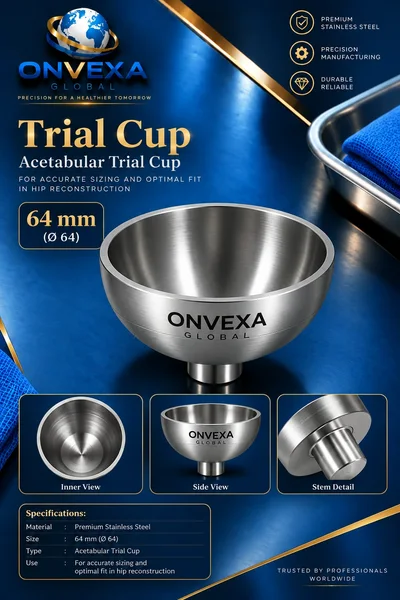
Precision-machined trial cup designed for accurate acetabular sizing and optimal implant positioning during total hip arthroplasty.
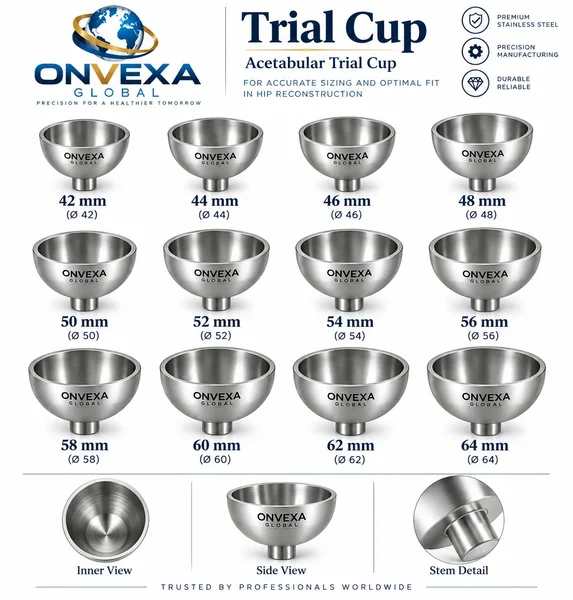
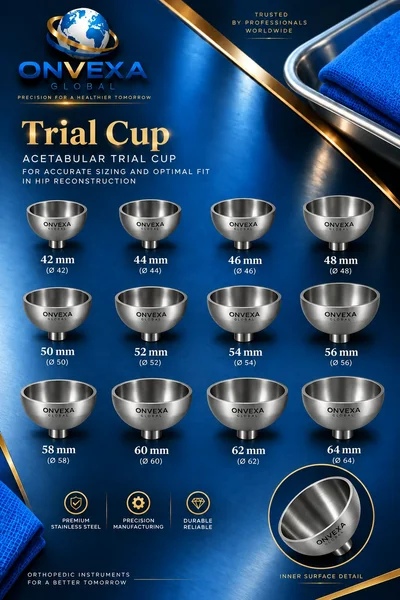
Select size
Choose a size to update the unit price.
Choose order quantity
Minimum order quantity (MOQ): 5 units
Discount is applied automatically to the complete product total. Shipping and final availability are confirmed with our export team.
The Orthopaedic Trial Cup is a precision sizing instrument utilized during Total Hip Arthroplasty (THA) to evaluate the reamed acetabular cavity. It allows surgeons to confirm the exact dimensions, depth, and spatial orientation required prior to impacting the final definitive implant, ensuring optimal joint mechanics and stability. Key Features Precision Machining: Manufactured to exact tolerances to perfectly mirror the geometry of the definitive acetabular shell, ensuring a true 1:1 anatomical fit. Assessment Fenestrations: Strategically placed viewing holes allow the surgeon to directly visualize the underlying bone, confirming the cup is fully seated against the acetabular floor without gaps. Secure Handle Interface: Features a robust locking mechanism (typically a threaded dome hole or quick-release system) that connects securely to the trial impactor handle for controlled insertion, manipulation, and removal. High-Visibility Sizing: Deeply laser-etched dimensional markings provide instant, glare-free size identification within the sterile field. Smooth Outer Profile: Designed to slide into the prepared cavity with minimal friction, preventing damage or unintended alteration to the newly reamed cancellous bone bed. Surgical Applications Primary Total Hip Arthroplasty (THA) Complex acetabular revision surgeries Trial reduction and range-of-motion (ROM) testing Intraoperative leg length and joint offset assessment
Indications & Use
- • Acetabular Cavity Sizing: To accurately verify the diameter, depth, and concentricity of the reamed acetabulum before committing to the final, definitive implant.
- • Implant Orientation Validation: To establish and confirm the optimal angles of inclination (abduction) and anteversion, ensuring proper biomechanics and minimizing dislocation risk.
- • Trial Reduction and ROM Testing: Used in conjunction with trial liners and femoral heads to articulate the joint, allowing the surgeon to test the full range of motion (ROM) and check for bone or soft tissue impingement.
- • Joint Stability Assessment: To evaluate soft tissue tension, capsular stability, and correct leg length discrepancy prior to unpacking sterile, costly definitive components.
- • Bone Bed Verification: Utilized via its fenestrations to ensure the cup is fully seated against the medial wall of the acetabulum without any remaining gaps.
Care & Sterilisation
Cleaning & Decontamination Rinse immediately after surgery to prevent blood, bone fragments, and marrow from drying, paying special attention to the assessment fenestrations (viewing holes) and the central handle connection mechanism. Disassemble the trial cup from any impactor handles or alignment guides prior to cleaning. Use a syringe or water jet to thoroughly flush out the internal threads or quick-connect locking mechanisms. Clean manually using only soft-bristled nylon brushes and pH-neutral enzymatic detergents. Strictly avoid abrasive pads, steel wool, or stiff wire brushes that could scratch the smooth hemispherical surface or obscure the size etchings. Sterilization The trial cup is fully autoclavable. Standard steam sterilization is recommended at 134°C (273°F) for 3 to 5 minutes using a pre-vacuum cycle. Ensure the cup is sterilized completely detached from the impactor handle to allow steam to penetrate the locking mechanisms and threaded interfaces fully. Inspection & Maintenance Routinely inspect the central threads or locking mechanism for wear, stripping, or cross-threading. A compromised connection can cause the trial to detach inside the surgical site or become stuck on the handle. Examine the smooth outer profile for deep scratches, gouges, or dents. A damaged surface can alter the exact dimensions of the trial or unintentionally damage the reamed cancellous bone bed during insertion. Verify the visibility of the laser-etched size markings. If the numbering becomes faded or illegible, the instrument poses a risk of incorrect implant sizing and must be replaced.
Related Instruments
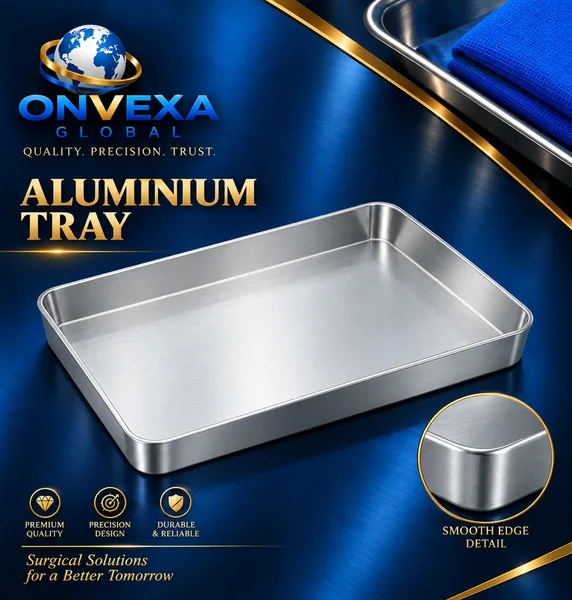
ALUMINIUM TRAYS
Lightweight, highly durable aluminium instrument trays designed for efficient sterilization and secure organization in demanding clinical environments.
MOQ from 5 units
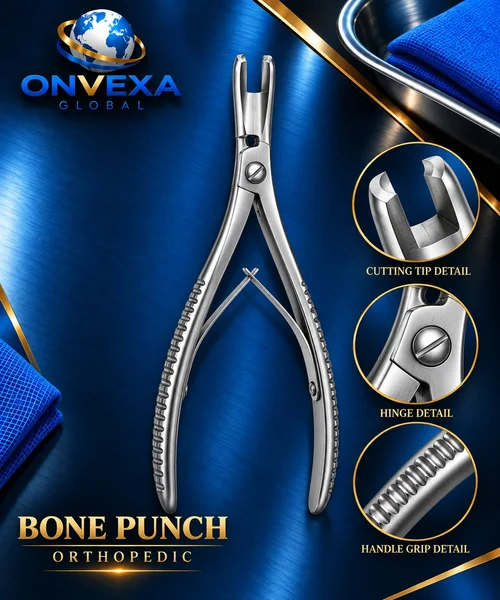
BONE PUNCH
"A precision-crafted surgical punch designed for the clean, controlled removal of bone and tough tissue in orthopedic procedures."
MOQ from 5 units
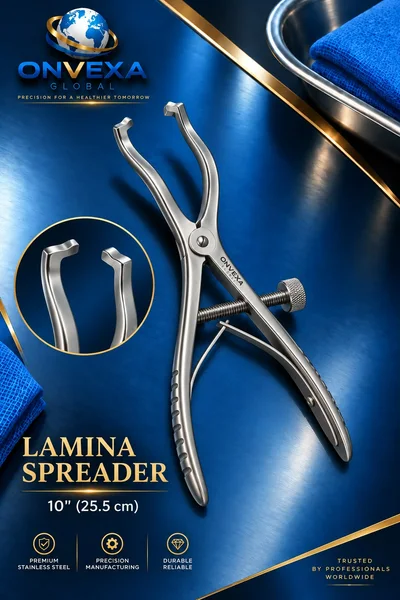
LAMINA SPREADER
Specialized self-retaining retractor designed for precise separation of the lamina during spinal and orthopedic procedures
MOQ from 5 units
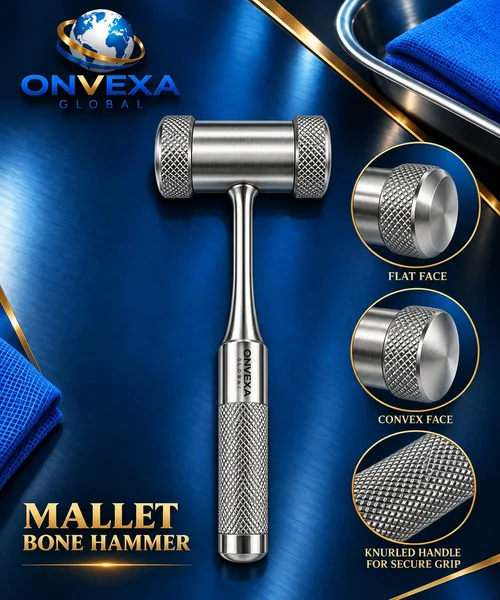
MALLET BONE HAMMER
A balanced, high-grade surgical mallet designed for precise and controlled impact during orthopedic bone procedures."
MOQ from 5 units