
Auto-playing · Swipe or drag product images
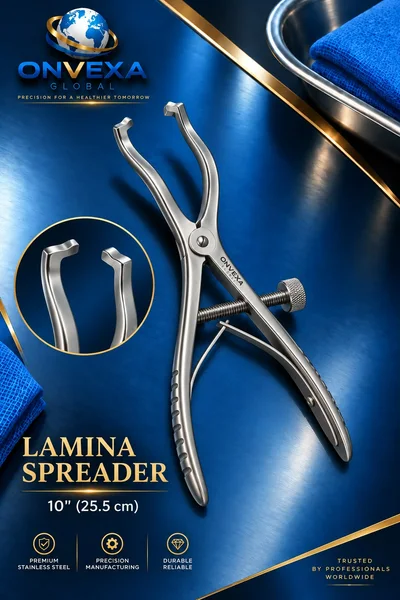
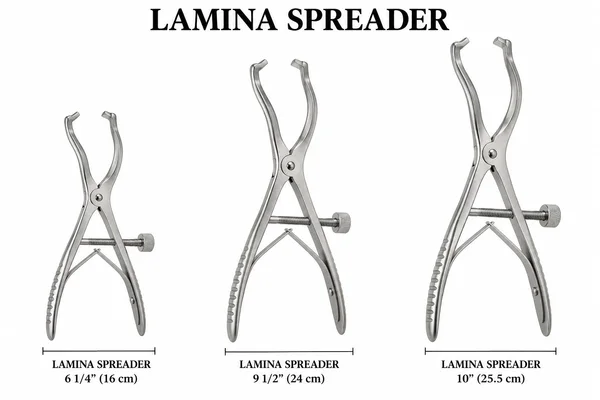
LAMINA SPREADER
Specialized self-retaining retractor designed for precise separation of the lamina during spinal and orthopedic procedures
Choose order quantity
Minimum order quantity (MOQ): 5 units
Discount is applied automatically to the complete product total. Shipping and final availability are confirmed with our export team.
The Lamina Spreader is a specialized surgical instrument designed to securely separate and retract the vertebral lamina during complex spinal and orthopedic procedures. It features a self-retaining ratcheting mechanism that provides surgeons with a stable, hands-free surgical field while minimizing surrounding tissue trauma. Key Features Self-Retaining Ratchet Lock: Ensures controlled, incremental spreading and maintains secure tension without continuous manual grip. Serrated or Toothed Jaws: Provides a firm, anti-slip grip directly on the bone surface to prevent displacement during surgery. Ergonomic Hinge Design: Distributes mechanical force evenly, allowing for precise separation of tight joint spaces or delicate bone structures. Medical-Grade Construction: Manufactured from highly durable, corrosion-resistant stainless steel for long-term clinical use and repeated sterilization. Anti-Glare Finish: Finished in a satin or matte polish to reduce harsh reflections from high-intensity operating room lighting. Surgical Applications Laminectomy and laminotom Spinal fusion and decompression procedures Joint separation and localized orthopedic bone retraction
Indications & Use
- • Laminectomy and Laminotomy: To spread the vertebral lamina, creating a wider surgical corridor for the removal of bone spurs, thickened ligaments, or accessing the spinal canal.
- • Spinal Decompression: Used during foraminotomies or microdiscectomies to safely separate bony structures and relieve pressure on the spinal cord or exiting nerve roots.
- • Spinal Fusion (e.g., PLIF, TLIF): To distract the disc space between adjacent vertebrae prior to the preparation and insertion of interbody bone grafts, cages, or artificial disc replacements.
- • Joint Distraction: Applied in general orthopedic surgeries to separate small articular surfaces (such as in the knee, foot, or ankle) to improve visibility, assess cartilage, or facilitate joint repairs.
- • Fracture Reduction: Occasionally utilized to gently pry apart or hold impacted bone fragments in place during complex open fracture realignments.
- • Associated Clinical Conditions
- • Spinal stenosis (cervical, thoracic, or lumbar)
- • Degenerative disc disease (DDD)
- • Herniated, bulging, or ruptured discs
- • Spondylolisthesis
- • Radiculopathy or sciatica (nerve root impingement)
- • Scoliosis and other spinal deformities requiring structural correction
Care & Sterilisation
Cleaning & Decontamination Rinse the instrument immediately after use with warm water to prevent blood, saline, and biological debris from drying in the ratchet mechanism or jaw serrations. Clean the spreader in a fully open position to ensure all hinges, box locks, and crevices are exposed to cleaning agents. Use only pH-neutral enzymatic detergents. Strictly avoid bleach, chlorine, or highly acidic/alkaline solutions, which can cause pitting, corrosion, or stress fracturing of the stainless steel. Utilize soft-bristled nylon brushes for manual cleaning. Never use steel wool or abrasive pads that can damage the anti-glare finish. Sterilization The instrument is fully autoclavable. Standard steam sterilization is recommended at 134°C (273°F) for 3 to 5 minutes using a pre-vacuum cycle. Always sterilize the instrument in the unlocked (open) position. Locking the ratchet during sterilization prevents steam from reaching all surfaces and can cause thermal expansion stress, eventually cracking the hinge. Inspection & Maintenance Apply a water-soluble, surgical-grade instrument lubricant (instrument milk) directly to the hinge, box lock, and ratchet mechanism after every cleaning and prior to sterilization. Never use industrial oils. Routinely inspect the working tips (teeth or serrations) under magnification for dulling, burrs, bending, or structural damage. Test the ratchet mechanism manually before each procedure to ensure it engages securely at each step and releases smoothly without catching or binding.
Related Instruments
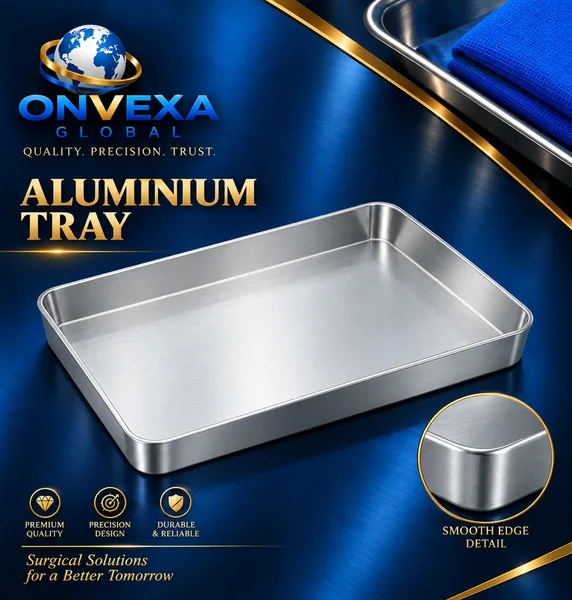
ALUMINIUM TRAYS
Lightweight, highly durable aluminium instrument trays designed for efficient sterilization and secure organization in demanding clinical environments.
MOQ from 5 units
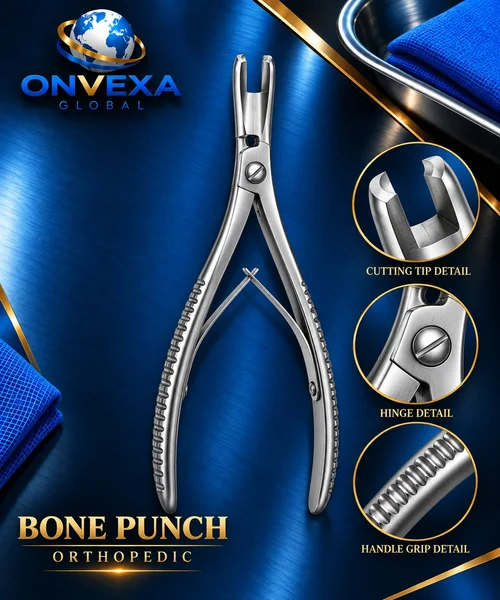
BONE PUNCH
"A precision-crafted surgical punch designed for the clean, controlled removal of bone and tough tissue in orthopedic procedures."
MOQ from 5 units
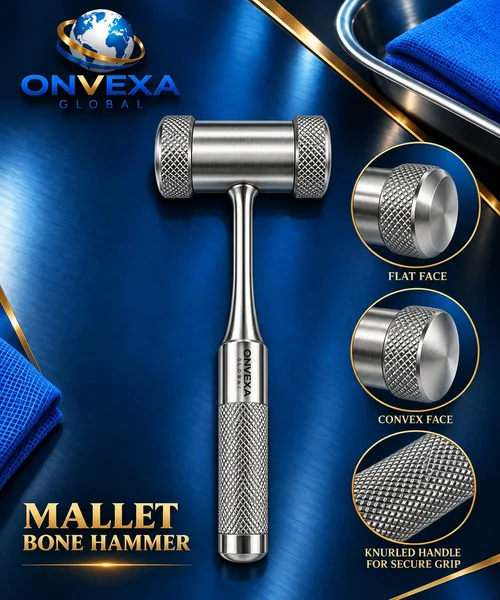
MALLET BONE HAMMER
A balanced, high-grade surgical mallet designed for precise and controlled impact during orthopedic bone procedures."
MOQ from 5 units
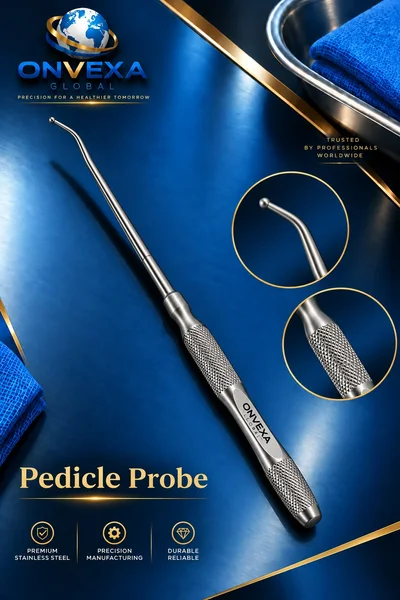
PEDICLE PROBE
Pedicle probe precision spine instrument for accurate pedical localization and preparation
MOQ from 5 units